Sunday, 2 May 2021

Simply Tubeless! A basic instruction guide to running standard tyres and rims tubeless.

 How Do All.

I have been running some of my bike wheels tubeless for about 5 or 6 years now and with great results on the whole.

I have run tubeless specific tyres on standard and tubeless ready rims, and also standard tyres on standard and tubeless ready rims.

I have used several tubeless sealants, Stans No Tubes sealant, Joe's Eco sealant and Effetto Mariposa Caffelatex Tyre Sealant to name a few. My outright favourite being the Joe's Eco sealant, which has yet to fail me!

I have also used various rim strips, sealing tapes and Ghetto tubeless variants depending on the tyres and rims I have been using, all work to a certain extent, but for my uses the best rim sealing strip I have found is a trimmed inner tube which when the tyre is seated and sealed creates I guess what you could call a semi tubular tyre. 

The inner tube sealing method is both cheaper and more versatile than most systems. I also use this system for mounting my standard tyres onto tubeless ready rims.

There are dozens of reasons for (and against) and ways of setting up tubeless, this is just my favourite method, and my reasons for doing this are simple convenience of not getting flat tyres when the puncture fairy visits, I also personally think the ride and handling is better, as for faster/lighter - heavier/slower? well that's something that really doesn't concern me, and I have found that my average speeds running tubeless have been similar if not a little quicker in some cases than running the same set of tyres with tubes.

Ok, so here is my Kingfisher Picnic Porteur bicycle which I hand built. I was originally running 26″ x 2.3″ (559 x 54mm) Rat Trap Pass TC Tyres which are very supple, thin cased tyres, tubeless ready. However I found that running them tubeless with Stans Tyre sealant, even the smallest of punctures would not seal fully, and when wet the sealed punctures could sometimes re-puncture, larger cuts of about 6mm would not seal at all due to the very thin tread and casing.

I then switched to 26" x 2.0" (559 x 50mm) Schwalbe Kojak tyres and have ran them with tubes for the past couple of years, but since having a couple of flat tyres within the same week lately I decided to set these up tubeless, as on my other bikes with the same tyres run tubeless I have not had a single flat for years!

Firstly for this set up you need a suitable size inner tube, this Schwalbe SV7 20" tube is the perfect size for wide 26" rims, my rims on this bike are 35mm wide. whatever size wheel you have you need to use a smaller inner tube that is stretched on your rim. a 26" tube will not work with a 26" rim, as there is too much slack.

Then with a rusty? (beach find on Walney Island) pair of scissors you need to cut around the outside (Tyre side of the inner tube) I start at the valve area and follow the mould line around the outer surface, then with a damp cloth clean off the talc from inside the tube. 

Here my is my standard, nothing special rim. it has one wrap of WTB sealing tape, as I used these rims with tubeless specific tyres previously, it doesn't matter what rim tape you have on your rim as long as it has some, I highly recommend Velox cotton rim tape!

Take your cut inner tube, place the valve stem through the hole in the rim and then stretch the tube around the rim, finally unfolding the cut edges over the sides of the rim. Also make sure your valve stem stays straight in the rim valve hole! and make sure the inner tube strip is centred and even all the way round.

It should look like this when done.

Now mount your tyre one bead at a time, and then with a high volume pump inflate your tyre, this may take some effort, however in this case the tyre seated and pumped up very quickly, and with little effort. 
If you have problems inflating the tyre, then you can either use a compressor or a modified pop bottle or fire extinguisher as a quick shot tubeless inflator, or if the well of your rim is very deep, then you can add a strip or two of duct tape or extra rim tape to build up the well before installing the inner tube. I have done this in the past but no longer find the need.
Also note that this old tyre has no sealant in it yet and even has a few pin prick punctures but still is inflated.

Next up you need some sealant! I use Joe's No Flats, Eco sealant I use a cheap 100mm syringe from eBay, a length of silicone tube (RC fuel tubing from eBay) which fits over the valve stem of the inner tube valve, a haemostat and a valve core tool 

Deflate your tyre and remove the valve core using the valve core tool.

Place the silicone tube on the syringe and close it with the haemostat. then with the plunger removed; fill the syringe to the recommended level with sealant. and replace the plunger just into the opening.

Now attach the silicone tube to the valve stem, and holding the syringe upside down (plunger down) shake gently to mix the sealant and sealing particles a bit, as they can clog the tube and valve stem in some cases. 
Remove the haemostat and quickly squirt the sealant into the tyre and plunge up and down a few time to clear the tube and valve stem.
Then reinsert the valve core and pump up your tyre again to a little higher than your intended pressure. 
I do not use high pressures, I usually run 5psi above the minimum recommended pressure (my preference) if you run your tyres at very high pressures then I don't recommend using this tubeless set up as there is the possibility of blowing the tyre off the rim!
I have found running lower pressures actually faster and more comfortable than the high pressures I used to believe in, I also rarely have punctures this way, and its kinder to your rims too!

Ok; so after inflating your tyre you need to turn the wheel every which way to fully coat the inside of the tyre and seal any pin holes, old punctures or voids in the thin side walls, and also seal the inner tube strip against the tyre, I also bounce the wheel around a few times on the floor to splash coat inner of the tyre, just to be sure.
Above; you can see where the sealant has filled and sealed a couple of tiny punctures, just wipe off the excess.
Note: If using a previously used tyre which has larger punctures/slits of 6mm or above, it is worth patching the tyre inside before starting, or you can plug the punctures first with the tubeless repair kit sticky strings mentioned down below. you can also use this to plug the puncture after adding the sealant and not being able to seal the larger puncture.


Above; you can see here that the sealant has seeped between the tyre and inner tube strip sealing it, eventually this will bond the tube strip to the tyre making that semi tubular tyre I mentioned earlier. 
You can still separate the tyre from the tube strip if you get a large un-sealable hole in the tyre, and then just remove the strip and use a standard inner tube to get you home.

It is worth leaving thin walled tyres on their side supported by a bucket or large pot for about 15 minutes a side so that the sealant can fill and seal the sidewalls properly as the sealant will spend most of its life only covering the tread area of the tyre as the wheel spins.

Once the tyre is fully sealed and you are happy that the job is a good one, you need to trim off the excess inner tube hanging over the rim sides. You can use a sharp pair of scissors, or like here I prefer to use a leather edge beveller tool (size 2) this cuts a fine smooth line and leaves hardly a visible edge to the inner tube.

A view of the cutting edge in the groove.

How the finished edge looks, it's almost invisible to all but the knowledgeable!

Using one hand to pull the strip of tube away as the tool is gently pushed around the rim, being careful not to scratch those lovely rims!

The finished wheel, and pile of inner tube edges. 

Finally! I recommend carrying a spare tube just in case of emergencies, however I have only once in 5 years needed this whilst using the supple cased Rat Trap pass tyres. and as I had forgotten that in my bag was an emergency tubeless repair kit for those times when the cut is too large for the sealant alone to fill the cut, this contains a tool to insert sticky rubber coated strings into the puncture, these then plug the puncture.

You will probably need to refresh the sealant every 6 to 12 months depending on climate, and if you have any punctures, generally I just remove the wheels and give them a shake to hear if there is still liquid in them and gauge if I need to add more and how much, you'll get a feel for it pretty quickly.

If I have forgotten anything please let me know and I will update this.
Any questions are welcome, feel free to use the contact button on my home page and elsewhere.
And please do let me know if you try this and how it worked out for you, or leave a comment at the bottom of this post.

Thank you for taking the time to read this, and if it was any help at all then I am happy to have helped in some way.

Take care,
Barry - The Knotty Bear.

Thursday, 29 April 2021

Cycle For sale! Reduced Prices!

 How Do All,

I have just reduced the prices of two of the cycles I have for sale.

Standard Highweels 54" Racing Penny Farthing For Sale! Brand New!

 For Sale!

£1,200.00
£1,100.00
or very nearest offer!
See the details of this machine here:


Ice Sprint TQ Hybrid Recumbent For Sale!
For Sale!
£2,950.00 
£2,750.00
or very nearest offer!
See the details of this machine here:

Saturday, 17 April 2021

Cord Making Machines.

 How Do All,

I have been busy making tools the past few weeks for customers in various parts of this small world.

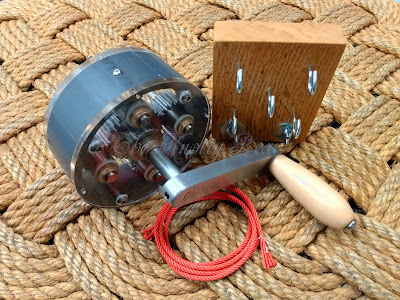
Here are a few of my recent cord making machine sets, all now gone, but more are being made in my small workshop and are available to order. 
Details can be found here:  Tools and Materials Shop

 
Ideal for making your own cords for Ply-Split Braiding & all other Cord Crafts.
Please see my Ply-Split Braiding page for examples of some of the items I make using my own hand made cords.

This machine quickly and efficiently makes cords from all kinds of yarns, including toilet paper and plastic bags if you like, made to your own diameter preference and firmness of lay from soft to super hard,  S or Z laid cord can be made, mixed colour or mixed yarn cords can be made. You are only limited by your imagination and whatever yarn you have.

These machine are designed and completely hand made by myself from the finest materials in my small workshop. I use these very machines myself and I have been making and using them for over 10 ten years without failure.

These outends are made from recycled Oak, some of which had some nice oil? stains.
The wood is sanded and sealed with several coats of shellac.

Detail of the brazed hooks.

Making a 10 meter sample of 10mm diameter sisal rope, made with very fibrous packing twine.


Thank you for looking,
Take care,
Barry.

Some New Grip Fids.

How Do All,
Whilst busy making cord making machines, I also made up some Gripfids for a customer to go with their machine, which they requested the handle to be left off so that they may possibly carve their own. 
Whilst I was at it I decided to make a new set of Gripfids for myself as I sold all but one of mine to a customer that was desperate to get hold of them. 
There are 1/4", 5/16" ,3/8" and 1/2" diameter Gripfids here.
I also made a small 1/4" double ended Gripfid which I am sure will prove unnecessarily useful! 

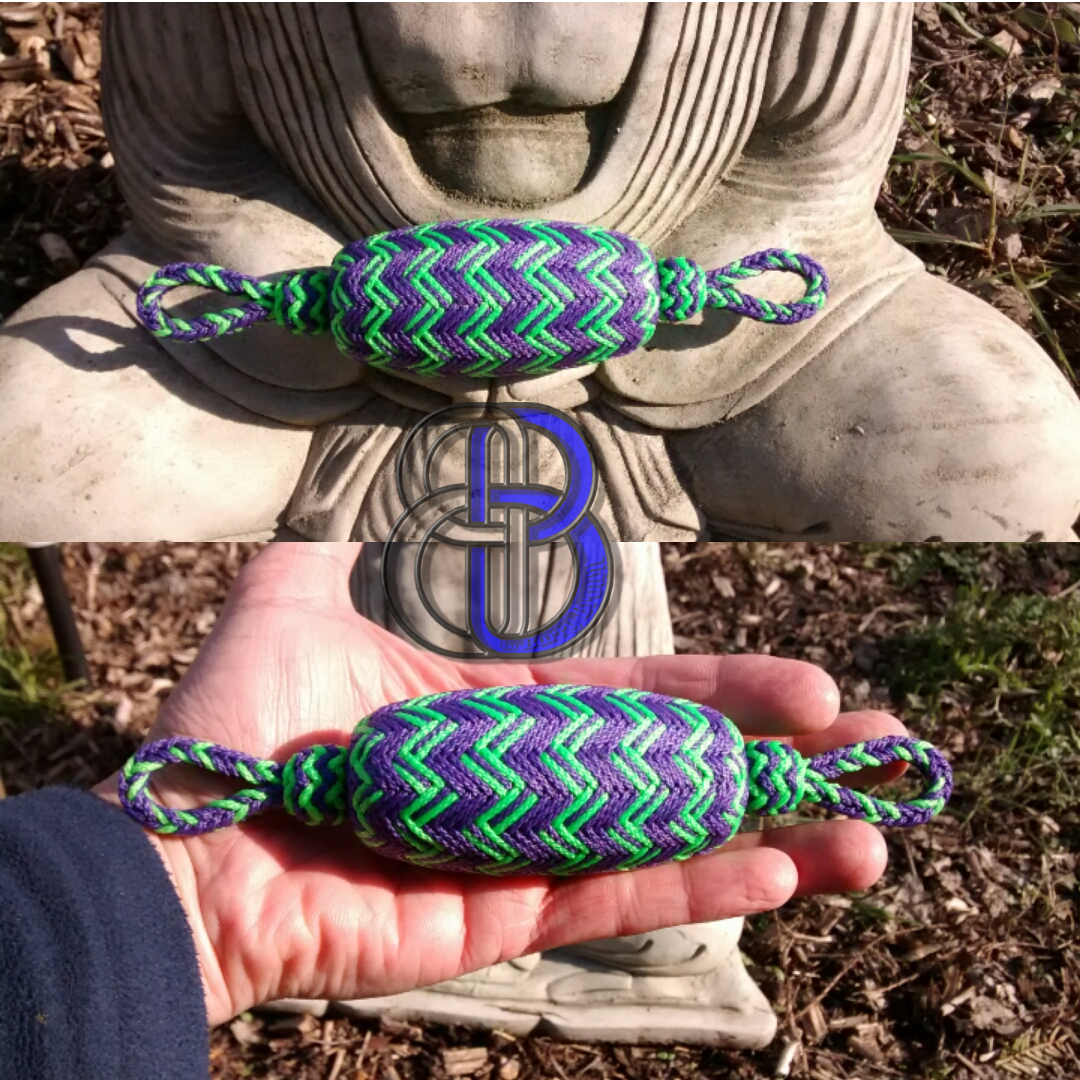
I covered one of my smaller Gripfids with a 5 Pass, Type 5 Pineapple Knot, with a varied interweave.
I love these knots, probably my favourite knot to tie and I tie them with no instructions, just straight out of my head and into my hand.

Along side a large covered net float which I found on Walney Island many years ago. 
this is another Pineapple knot with a varied interweave.

Like a star flower

The knot is made up from 5 separate 6 bight x 7 lead Turk's-Head Knots or Casa Knot if you like.
Tied in 1.5mm polypropylene twine.

Thank you for looking.
Take care,
Barry

Sunday, 21 March 2021

Refurbishment of a customers 140 year old Chest Beckets

How Do All,
I was recently sent a pair of around about 140 year old antique sailors sea chest beckets for refurbishment.
This is something I have not done before, and had both beckets been in better condition I would have opted to preserve them rather than refurbish them.

The owners of the beckets also have the original chest and cleats which they have now refurbished themselves.
Both the chest and beckets still belong to descendants of the original owner. and they actually have lots of original paperwork giving the name and dates of the sailors birth, his travels, and also his passing; I think this is absolutely amazing that these have survived for over 140 years, are still together, and in the same family.
The Able-Bodied Seaman John Lewis was born in 1866. 
You can see some pictures of the finished chest, and also some of the documentation shown at the end of this post, with kind permission of the owners. Thank you.
 
The chest and beckets had been covered in white gloss and other modern type paints over the years, and about thirty years ago the current owners had a go at removing the paint from one of the beckets, hence why the two look very different in the before pictures.
 
The chest, cleats and beckets.
Photo with kind permission of the owners. 

The beckets as I received them.

Lovely white gloss over everything.

The other becket stripped bare.

Upon examining the beckets for myself, I discovered that the remaining bolt rope had been chafed through to the iron core, and the rope and tarred marline under the fragile and chafed leather had all but rotted to dust.
The pinked leather washers on one side had been stretched and the holes enlarged, cracking and splitting the dry leather in the process. 

Chafed to the bone so to speak, from use and the harsh marine environment no doubt.

After the leather had been removed the end knots pretty much fell away of their own accord.


The six surviving pinked leather washers, the ones on the right had been enlarged by the becket legs pushing them outward and over the end knot of the bolt rope.

The perished remains of the surviving bolt rope, and one of the leather washers in the background.

On the still painted becket I carefully removed the outer layers of paint (I actually spent several days with paint stripper, white spirit, and methylated spirit baths and an a tooth brush or two) revealing what remained of possibly the original finish. 
The original finish appeared to be a dark red ochre/oxide colour over the tarred marline bails (central handle part), the legs and eyes where in white, and the Turk's-Head knots in a vaguely greenish blue, the manrope knots on the ends of the bolt rope appeared to be the same blue but with a possibly later added red central part.

This was as far as I was willing to strip the good becket, and I wanted to save as much of the remaining finish as possible, had both been like this, then a clear coat to preserve this state would have been my preference.

On the left you can see the original red ochre/oxide colour over the tarred cord.

One of the end knots of the bolt rope showing the later? red centre, it looks as if the blue was painted over with white and then the red centre, but only the original owner/s would know for sure.

After soaking the misshaped becket for several hours I reshaped it as best as possible, but was not able to remove the lumps and bumps under the coving of the bail (handle part), and remaking the becket from scratch was not a viable or cost effective solution.

The reshaped becket on the left. 
Also the makings of the new bolt ropes and a start on the pinked leather washers.

I made up two new bolt ropes from hemp rope over a rust-less steel core and, and made up twelve new pinked washers in 3 different sizes based closely on the originals.

Mocking up the new bolt ropes for size and looks.

After several coats of shellac and primer paint I opted to paint the beckets in colours I thought complimentary to the originals though not an exact match. and the deep teal colour used on the knots was a request from the customer, and I think a good call as the blue colour I was looking at would not have looked half as good in my honest opinion. (the teal knots are actually more green in real life, they appear more blue in the pictures)

Freshly finished with optional cleat fixing hardware.

I was not able to make the pair physically match, as they started out in very different states of repair, also when originally made by the sailor they may have not been made simultaneously so have different thicknesses of material as well as physical proportions, I am however very happy with how they turned out.

The chest  and beckets back together again.
Photo with kind permission of the owners. 

The chest belonged to able-bodied seaman John Lewis
Photo with kind permission of the owners. 

The opposite end of the chest.
Photo with kind permission of the owners. 

Certification of service aboard the Barque "Lota" from the vessels Master
Photo with kind permission of the owners. 

A telegram to Ann Lewis (wife) from the Barque "Lota"
I can only half read it at best.
Photo with kind permission of the owners. 

Certification of service aboard the vessel "Indian Empire" from the vessels Master.
Photo with kind permission of the owners. 

Thank you for looking,
Take care,
Barry / The Knotty Bear